Some books I read in 2025: Goodnight Mister Tom
It’s a little humbling looking back at the old Some Games I Played articles and seeing how I was burning through at least a dozen books a year (including stuff i might not have felt the need to review), when nowadays committing to any form of entertainment feels like an endeavour if I don’t turn it into a project. It’s quite possible I’ve opened more books and tossed them aside than I’ve read in full the past five years…!
Sometimes you just have to be gentle with yourself. There’s a lot of classics across all mediums I figure I ought to experience, but trying to force yourself through them when you’re not feeling pliable isn’t doing yourself any favours. And if I’m not reading much outside of the occasional comic book, then maybe it’s about taking baby steps to re-acclimatise myself. Like listening to an audiobook! Or reading a children’s book! Or listening to an audiobook of a children’s book!
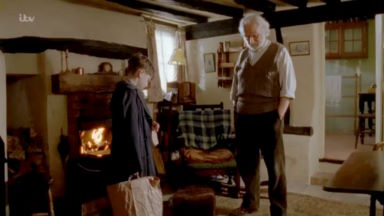
Goodnight Mister Tom is one of those melancholy yarns I’m a sucker for — a coming-of-age story that tackles stunted growth and also the inevitable ageing and demise of one’s newly found father figure? Sign me the heck up, baby.
It’s actually a story about the evacuation of children during World War II, but it can be two things. Soppy little William is among the many inner-city children send to a sleepy country village, and is put under the custody of the aloof loner Tom. It’s a period of adjustment for everyone involved, especially poor William who finds himself at odds with his peers — meek and scrawny for his age, clearly too frightened to dare stand up for himself, and showing signs that he’s come from an abusive household.
For kids learning about World War II and the evacuation of children away from major cities, this made a good introduction to the ordeal: the resulting culture shock for all involved parties, a look at home life and the sacrifices involved while the war was overseas, as well as a general coming of age story.
Tom quickly identifies the boy as someone who’s had a rough go of it, and does his best to provide for him; teaching him to read and write, helping him overcome his plethora of fears, and giving him the upbringing he’s been denied. We’re truly painted a picture of William’s growth throughout the book, slowly coming into his own as a creative and expressive little boy, fostered by the warmth and compassion of those around him, making it all the more galling when he’s to be shipped back home to the mother who doesn’t love him.
I’d definitely watched the ITV film adaptation prior to this, but had assumed I’d read the book, so it was interesting seeing things play out that bit differently than I remembered. The book is very much written for a young audience, told from William’s perspective in simple language and expressing his side of the story for the most part.
I remembered the major plot beats — it’s hard to forget the ordeal in London, the bombings and his rescue — but there’s so much more before, after, and in the interim. All throughout, it’s a story of change and adjustment, both positive and negative, grieving for what’s lost or what could’ve been, especially in knowing what William’s mother wanted for him: to bury himself, to be a nothing, a punching bag for her own self-worth.
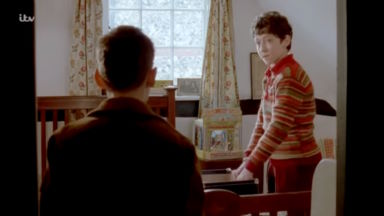
It’s all the small moments that compound into change and growth that are so satisfying to read. Zach, the son of a theatre troupe, is the first to make friends with William (seemingly because he’s the only one who isn’t put off by his pontifical mannerisms), and it’s through him that William’s lust for life is encouraged — not just his knack for writing, drawing and performing, but his curiosity and appreciation of the world at large. William builds a good little group of friends who all hang out and do activities together, but Zach’s clearly a bestie.
For as low-key as the story’s events may be, it’s always laced with the unease of what the future may bring. Not just the threat of war — the safety of family near the air raids or if the fighting moves closer to home — but even in prospects and expectations, like the girls yearning to make it into university, something more to aspire for than just who to hook up with. Loss is a major theme in the back half, and how to carry forward without ignoring it, most evident in Geoffrey, the painter William and Zach meet whose home tells a tale of his time in the war; having lost a leg, and carrying the memory of his deceased friend.
Despite enduring even more heartbreak, William finds himself feeling more ‘whole’ by the book’s end, having opened up and discovered himself as a person. Being vulnerable and sensitive is not a sign of weakness, and embracing others into his life, carrying a piece of those he’s lost still in his heart has carried him so far. Tom has been his rock the entire time, but is showing his age a little; a melancholy acknowledgment that nothing lasts forever and dynamics will change, but William is so much more equipped for a life ahead of him now, and he owes it to this old man and everyone who’s shown their support.
Rewatching the ITV version, I was surprised how much it re-orientates things. It largely hits the same plot beats, but it’s very much restructured to shift the focus from William to the titular Tom — and understandably, seeing how John Thaw is the star. It’s Inspector Morse, the big man from the telly! He’s clearly who you’re here to see!
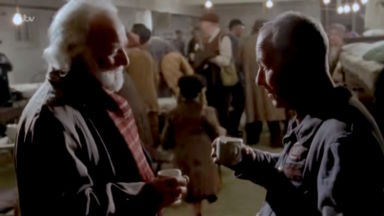
He’s much more gruff and brusque than his book depiction, which came across as more of an implied attribute before his visit to London and run-ins with childcare staff. He begins very much a grumpy old man who has no room in his heart for a boy to look after, and rushes off to the home office at his first opportunity to try and pass the buck.
He’s never bad to the boy, he just lacks the gentle touch or communication skills, his demeanour appearing intimidating to William who’s only ever known neglect and abuse. The film has a lot of fun defrosting his image, the villagers witnessing this grumpy gus hosting a birthday party or taking a gaggle of kids to go fishing.
It’s a story of learning to be a parent, Tom having to re-enter chapters of his life he thought he’d closed. In the book, Tom’s wife’s passion was illustrating, so darkening the door of the art supplies shop to provide for William is a difficult step for him, but an ultimately positive one. Towards the end, we learn that his wife and newborn son died in childbirth, ending that life before it even started; adopting William is a chance to try again.
The movie changes this so they died of fever while Tom was away at war, his son 5 years old at the time, now painting a picture of a man coping with a life that was unexpectedly ripped away from him. Likewise, it’s implied his wife’s passion was for music, hence why he’s so touchy about William inspecting the organ in the corner, but overcoming that grief allows him to open up and take part in the church choir, baby steps towards being a more visible member of the community.
I’m always interested in how stories get adapted between mediums, to work to their respective benefits. The book is upfront about a lot of its internal thoughts, because it’s a book for youngsters, it’s gotta say the quiet part loud! Tackling William’s abuse is smartly done in visuals: Tom’s reaction to the belt and the boy’s wounds saying so much, and unearthing it while gardening is a keen way of expressing he’s thinking about the boy when he’s away, and hoping it’s not as bad as he fears.
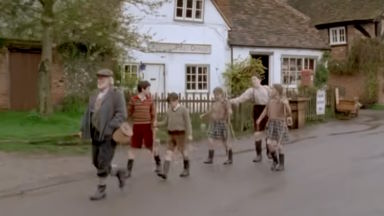
Obviously for a 100-minute running time, it’s got to make some trims, and the entire child perspective is kind of neutered. It’d be asking a lot for young actors to bring that story to life! There’s some sweet scenes like the birthday party and teaching William to write, but we just don’t get the same insight into him as the book provides, nor the framework that facilitates his growth.
I’d argue it falters in the back half after William’s rescue from London, as a lot of story baggage is dropped on Tom’s back that was spread across multiple peers in the original. Zach is the one friend who almost exists in the movie, but his presence isn’t nearly as visible or memorable as it was in the book, so all the little lessons he teaches William and even his death just don’t resonate like they should. William’s got a lot more peers and hobbies to turn to while grieving Zach in the book, and has the emotional maturity to mull things over and reflect.
Here, it has to transplant some of Geoffrey’s dead-friend discussion to Tom talking about his wife, and then stitches it together with teaching William to ride Zach’s bike, since riding that thing is the only notable trait Zach has in this version. If I can’t impart upon you the strength of creativity and self-expression, then I can at least bestow to you my sick wheels. William referring to Tom as “dad” for the first time is an adequate note to end on, but after already hitting a strong emotional climax with William’s rescue and adoption, it feels like it’s trying to make a meal with the table scraps.
That said, John Thaw’s performance really does make it. I reiterate, he’s what you’re here for! The child specialists grilling him on why he wants this child, pegging him as an embittered old man latching onto someone to look after him in his old age, is very powerful. He’s aware of his age, and hates the thought of bringing William further heartbreak when he can no longer be there for him; he himself acknowledges it’s not a perfect situation, but neither are the alternatives. They don’t know the lengths he’s gone for his well-being.
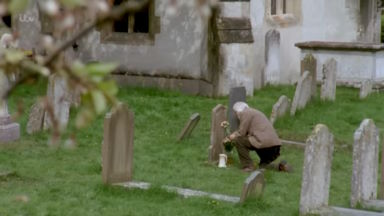
It’s a topic that’s only addressed in the book’s final chapters through William’s thoughts, when he’s becoming more grown-up and secure in himself. It’s here where the relative childishness of film William works well, as he’s simply not as capable at expressing himself — a lot of his pleas are unspoken, and Tom simply acts in his best interests to the best he can perceive. So Tom’s response to why he wants to care for him–
“Because I love him, of course. As if he was my own flesh and blood, I do. And for what it’s worth, I think he loves me, too.”
… it can’t be said with certainty, but he doesn’t know who else could care for the boy like he could.
I’m a sap who loves this sort of found-family melancholia, so of course I’ve got good things to say about it. The film is charming, a good vehicle for John Thaw’s performance, and seeing the story restructured around him is a smart move, even if I find the ending just hasn’t the puff it hopes it has. It kind of stinks realising it didn’t hold up as well as I’d hoped, but it is nice discovering the book scratches even more melancholia itches I didn’t even know about!

Ooh, this sounds like a book I’d like to read. I should check to see if my library has it.